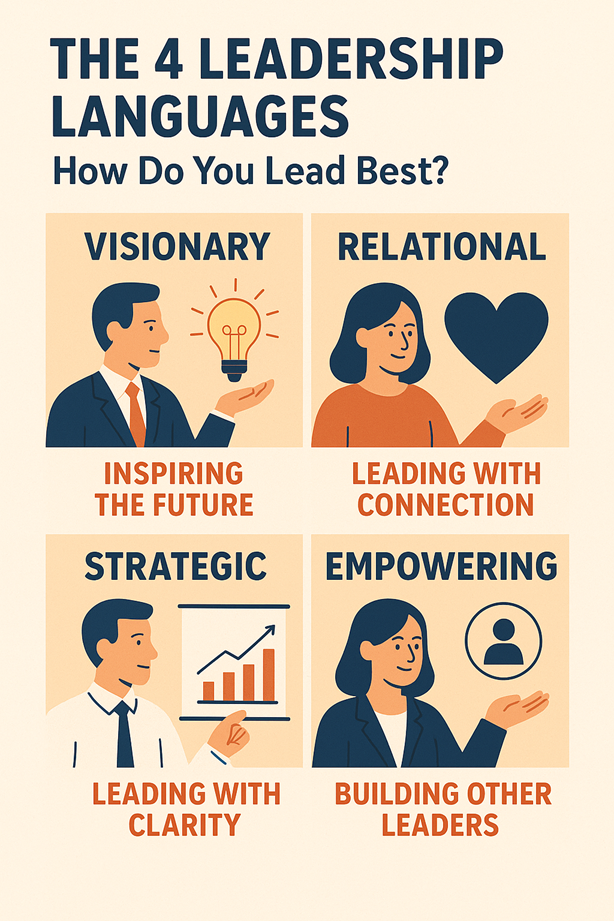
What separates a good leader from a great one? Is it vision? Decisiveness? Empathy? The truth is, effective leadership is less about a single magic trait and more about mastering a critical skill: communication. But not everyone communicates—or leads—in the same way.
Think of it like speaking a language. You might be fluent in one, but to truly connect in a global world, knowing multiple languages is a superpower. The same applies to leadership.
The concept of “Leadership Languages” provides a powerful framework for understanding your innate leadership style and how to adapt it to connect with your team, navigate challenges, and achieve extraordinary results. So, what are these languages, and which one do you speak?
1. The Language of Inspiring Leadership
The Inspiring leader is the visionary, the motivator, the north star for their team. They lead with passion and a clear, compelling picture of the future.
How You Lead:
-
You are a master storyteller, painting a vivid picture of “what could be.”
-
You focus on the “why” behind the work, connecting daily tasks to a larger purpose.
-
You energize your team with optimism and enthusiasm, especially during challenging times.
-
You empower others, fostering a sense of ownership and innovation.
Watch Out For:
Without grounding, inspiration can feel like empty hype. Teams may struggle if big ideas aren’t paired with clear, actionable steps. The key is to balance your vision with practical milestones.
Best For: Driving change, launching new initiatives, and motivating teams during periods of transformation.
2. The Language of Commanding Leadership
The Commanding leader is direct, decisive, and results-oriented. They provide clear direction and expect execution, often thriving in high-stakes environments where time is critical.
How You Lead:
-
You are clear, concise, and leave no room for ambiguity.
-
You make quick decisions and take ownership of the outcomes.
-
You establish clear structures, processes, and chains of command.
-
You excel in crises, providing calm and decisive direction under pressure.
Watch Out For:
If overused, this language can be perceived as authoritarian or micromanaging. It can stifle creativity and make team members feel unheard. The key is to know when to be commanding (e.g., in a crisis) and when to step back and listen.
Best For: Crisis management, turning around underperforming projects, and situations requiring unambiguous instruction.
3. The Language of Deliberate Leadership
The Deliberate leader is the strategist and analyst. They lead with logic, data, and careful planning. For them, precision and accuracy are paramount.
How You Lead:
-
You base decisions on research, evidence, and thorough analysis.
-
You are meticulous about planning and risk assessment.
-
You value process and quality control, ensuring things are done correctly.
-
You ask probing questions to uncover potential flaws and opportunities.
Watch Out For:
An over-reliance on data can lead to “analysis paralysis,” where decisions are delayed in the pursuit of perfect information. This can slow down innovation and frustrate more action-oriented team members. The key is to balance thoroughness with timeliness.
Best For: Complex projects, financial planning, technical development, and any scenario where precision is critical.
4. The Language of Supportive Leadership
The Supportive leader is the coach and the connector. They lead with empathy, trust, and a deep focus on team well-being and harmony.
How You Lead:
-
You actively listen and seek to understand your team members’ motivations and challenges.
-
You build a culture of psychological safety where people feel comfortable taking risks.
-
You invest in your team’s professional growth and personal development.
-
You resolve conflict by fostering collaboration and consensus.
Watch Out For:
A desire to maintain harmony can sometimes make difficult conversations or necessary confrontations challenging. There’s a risk of prioritizing feelings over accountability. The key is to combine support with clear expectations.
Best For: Building long-term, high-trust teams, fostering innovation and collaboration, and improving employee retention and morale.
The Ultimate Leadership Skill: Becoming Multilingual
While you likely have a dominant “native” leadership language, the most effective leaders are multilingual. They have the emotional intelligence to read a situation and adapt their style accordingly.
-
You might need to be Commanding to navigate a sudden market shift.
-
Then, switch to Inspiring to rally the team around the new direction.
-
Use a Deliberate approach to plan the new strategy.
-
And lean on your Supportive skills to manage your team’s morale through the stress.
How to Discover and Develop Your Leadership Language
-
Self-Reflect: Think about feedback you’ve received. Are you often called “visionary,” “direct,” “thorough,” or “caring”?
-
Ask for Feedback: Use 360-degree reviews or simply ask your team: “How would you describe my leadership style?”
-
Observe and Adapt: Pay attention to your team’s reactions. If your message isn’t landing, maybe you’re speaking the wrong language. Try translating your point into a different style.
-
Practice Flexing: Intentionally use a non-dominant language in a low-stakes situation. If you’re naturally Commanding, try a more Supportive approach in your next one-on-one.
Conclusion: Lead with Intention
Understanding the 4 Leadership Languages isn’t about putting yourself in a box. It’s about gaining the self-awareness to lead with intention and the flexibility to connect with every member of your team. By expanding your leadership vocabulary, you stop forcing your team to understand your dialect and start speaking in a way that they can truly hear and embrace.
So, we have to ask: Which Leadership Language do you speak, and which one do you need to practice? Share your thoughts in the comments below