Future-Proof Your Career: The 10 Must-Have Employability Skills for 2026

In today’s hyper-speed job market, relying solely on technical know-how is no longer a guarantee of career longevity. The ground beneath us is shifting rapidly, driven by the triple threats of artificial intelligence acceleration, the normalization of hybrid work, and relentless digital innovation.
To not just survive but thrive in this new landscape, professionals need more than just a diploma or a coding certificate. They need a robust set of employability skills. Often called “soft skills,” “transferable skills,” or “enterprise skills,” these are the essential human capabilities that determine how effectively you use your technical knowledge.
The job market of 2026 will look vastly different from today’s. The good news? By focusing on the right blend of human-centric and future-focused skills now, you can future-proof your career against obsolescence.
Here is your guide to the top employability skills employers will be desperately seeking in 2026, and how you can start cultivating them today.
What Are Employability Skills (And Why Do They Matter More Than Ever)?
Think of your technical skills (hard skills) as the applications on your phone—they perform specific tasks. Employability skills are the operating system. They determine how smoothly those apps run, how well they integrate with others, and how quickly the system adapts to updates.
These skills include critical thinking, emotional intelligence, communication, and adaptability. Unlike technical skills that are tied to specific roles or industries, employability skills are completely transferable. They are relevant whether you are in healthcare, tech, finance, or education.
The Shift in Hiring: Hiring managers are increasingly prioritizing these portable skills. Why? Because technical skills become outdated quickly. A hire with high adaptability and strong problem-solving abilities can learn the next new technology; a hire with only today’s technical skills cannot. These core skills are the key differentiators that turn a decent candidate into a long-term company asset and a future leader.
The Top 10 Employability Skills Employers Want in 2026
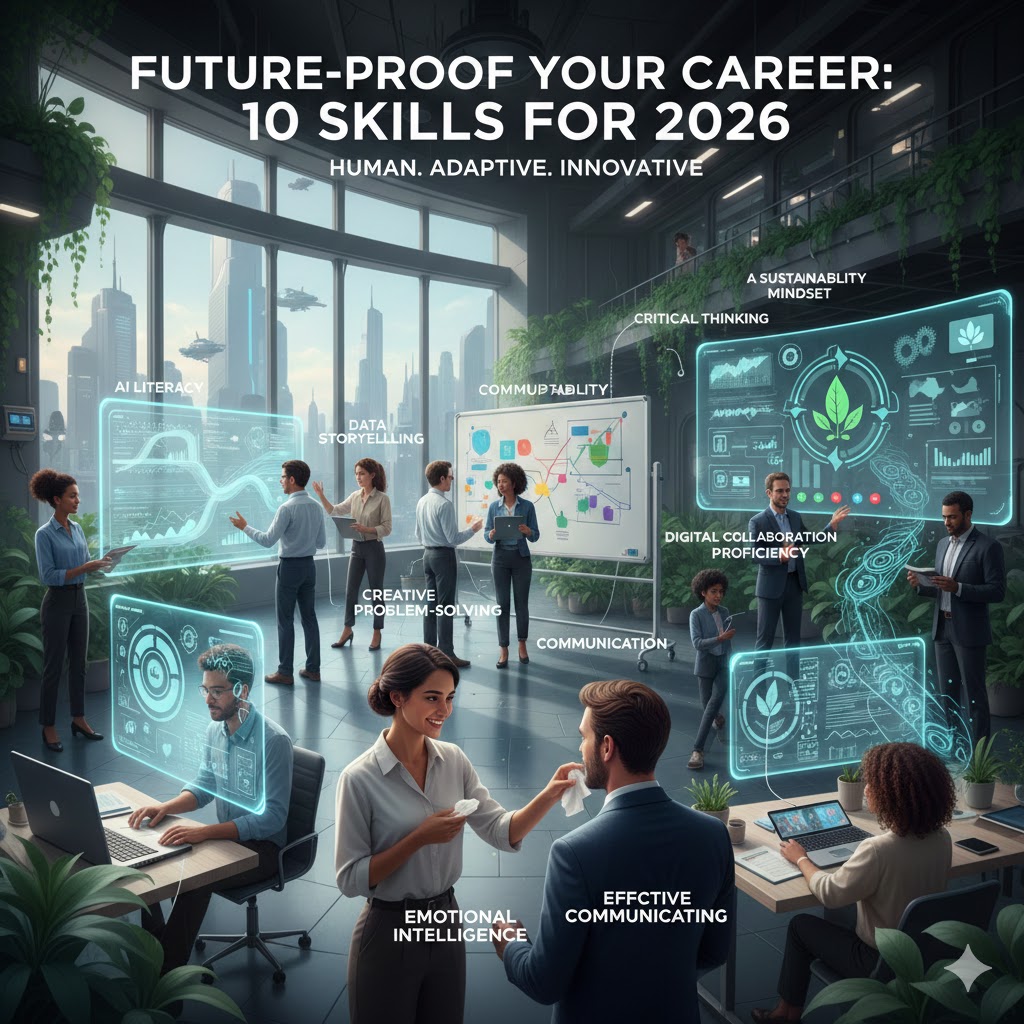
The most valuable employees in 2026 will possess a unique blend of timeless human traits and modern digital fluency. Here are the 10 essentials:
1. Emotional Intelligence (EQ)
As machines handle more data processing, the human ability to understand, manage, and empathize with emotions becomes premium currency. High EQ is crucial for navigating complex team dynamics, resolving conflict gracefully, and practicing inclusive leadership.
2. AI Literacy
You don’t need to know how to code an AI, but you absolutely must know how to work with one. AI literacy involves understanding how to utilize AI tools to augment your work, knowing their limitations, and understanding the ethical implications of their use. It’s about moving from fear of replacement to collaboration for efficiency.
3. Data Storytelling
We are drowning in data. The skill of the future isn’t just analyzing intricate data sets—it’s translating those numbers into a compelling narrative that stakeholders can understand. Data storytellers use insights to persuade, drive better decision-making, and increase engagement.
4. Creative Problem-Solving
This timeless skill remains vital across every sector. Automation handles routine tasks, leaving humans to tackle complex, novel challenges. Employers need fresh thinkers who can analyze ambiguous issues, generate innovative solutions, and effectively implement them.
5. Radical Adaptability
The only constant is change. Adaptability is no longer just about rolling with the punches; it’s about embracing resilience and thriving in uncertainty. Employers reward workers who quickly learn new technologies, pivot strategies, and maintain efficiency during disruption.
6. Effective Communication (Across all mediums)
Clear communication is the bedrock of collaboration. In 2026, this means articulating ideas clearly not just face-to-face, but through varied digital channels, written reports, and visual presentations. Active listening and tailoring messages to diverse audiences are essential for client satisfaction and internal teamwork.
7. Digital Collaboration Proficiency
Remote and hybrid work are here to stay. Knowing how to use platforms like Slack, Zoom, Microsoft Teams, or Asana isn’t optional—it’s foundational. True proficiency means seamlessly managing teamwork, building rapport, and driving innovation across different time zones without being in the same room.
8. Critical Thinking
In an era of misinformation and information overload, the ability to evaluate information objectively is paramount. Critical thinkers don’t just accept data; they question assumptions, identify biases, and make sound, reasoned decisions that improve organizational performance.
9. A Sustainability Mindset
Corporate responsibility is shifting from a PR side-project to a core operational requirement. Employers are prioritizing professionals who understand environmental impact and can integrate eco-friendly practices into everyday business operations to ensure a responsible future.
10. Creativity and Innovation
Creativity is the spark that drives growth, from product design to process improvement. As AI takes over standardized tasks, human creativity—the ability to connect seemingly unrelated dots to generate new ideas—becomes an irreplaceable asset.
How to Build Your Future-Ready Skill Set Now
You don’t acquire these skills overnight, but they can be cultivated with intentional effort. Here is how to start building your employability toolkit:
-
Leverage Targeted Online Learning: Don’t just take random courses. Use platforms like LinkedIn Learning or Coursera specifically to target your weak spots, such as courses on “Leading with EQ,” “Data Visualization for Beginners,” or “AI Prompts for Productivity.”
-
Seek Strategic Mentorship: Find a mentor who excels in the soft skills you lack. A good mentor provides a safe space to practice communication, receive honest feedback on your strategic thinking, and build confidence.
-
Volunteer for Cross-Functional Projects: The best way to learn leadership and teamwork is by doing. Volunteering for community projects or internal company initiatives outside your usual scope forces you to adapt, collaborate with new personality types, and solve unfamiliar problems.
-
Maximize Real-World Experiences: Whether freelancing, interning, or in your full-time role, treat every day as a lab. Actively practice taking initiative, managing your time better, and consciously refining how you communicate with difficult stakeholders.
The Final Takeaway
The job market of 2026 won’t just demand that you know what to do; it will demand that you know how to adapt, collaborate, and innovate while doing it. By focusing on honing these 10 employability skills now, you aren’t just preparing to get hired—you are preparing to lead.